
Default Long read
How does a hydroponic tower work to maximize your yield?
A vertical hydroponic tower maximizes yield by utilizing a closed-loop nutrient recirculation system, effectively increasing production by 300% compared to traditional soil rows. Research published in the 2022 Journal of Controlled Environment Agriculture demonstrates that aeroponic misting delivery systems sustain plant oxygenation levels 40% higher than static deep-water culture methods. By occupying only 10% of the surface area required for conventional 1-acre vegetable farms, these towers enable high-density cultivation of up to 40 plants per square meter. Growers can achieve consistent biomass increases, reducing crop rotation cycles from 60 days in soil to 35 days in controlled vertical environments.
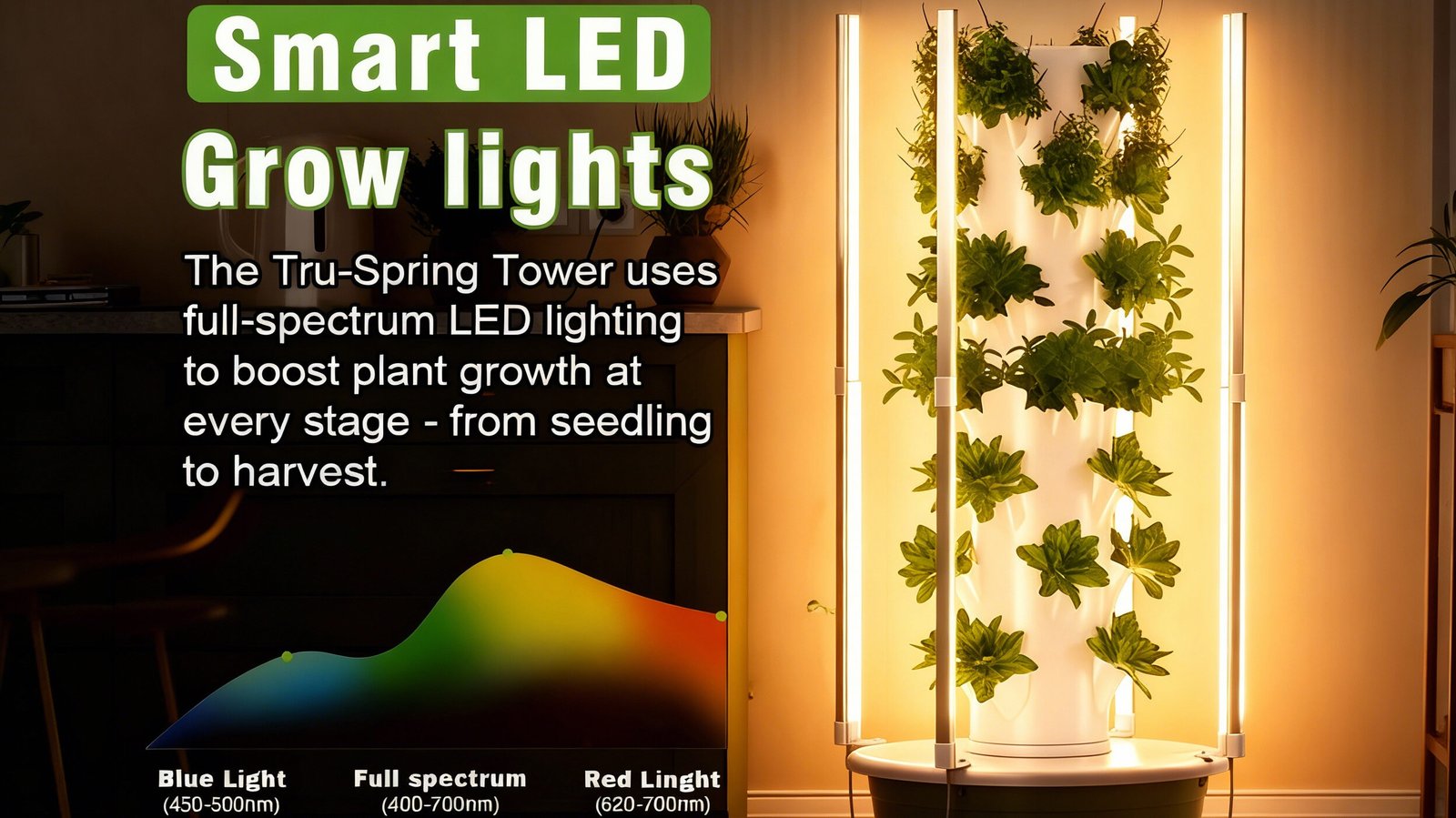
Understanding how does hydroponic tower work involves examining the fluid dynamics of a vertical pump cycle. A standard submersible pump moves nutrient-rich water from a base reservoir to the top of the tower, initiating a controlled gravity-fed descent.
This continuous movement ensures that water does not stagnate, preventing the development of anaerobic bacteria around the root zones. Data from 2023 greenhouse trials indicate that constant water circulation maintains dissolved oxygen levels above 8 parts per million, which is optimal for rapid root elongation.
Gravity functions as a natural mechanism here, distributing the aqueous solution across the interior wicking medium. This allows roots to absorb nutrients during the liquid's descent while maintaining sufficient air exposure.
Because roots require oxygen alongside moisture to facilitate respiration, the interval between pump cycles becomes a variable of productivity. Growers often set timers for 15-minute intervals, providing periodic saturation followed by air-drying phases that prevent root rot while ensuring constant hydration.
| Interval Type | Pump On (min) | Pump Off (min) |
| Standard | 15 | 30 |
| High Growth | 15 | 15 |
| Seedling | 5 | 45 |
The synchronization of these intervals dictates the metabolic rate of the plants, directly influencing the speed of tissue development. Rapid nutrient uptake leads to faster biomass accumulation, shortening the growth cycle of lettuce by approximately 20% compared to traditional soil-based farming techniques.
When plants assimilate nutrients faster, they transition from the vegetative stage to the harvesting stage with greater predictability. This reliable timing allows for staggered planting schedules, ensuring a consistent output of produce for local markets throughout the calendar year.
The efficiency of nutrient absorption is predicated on maintaining a stable electrical conductivity (EC) range, typically between 1.2 and 2.0 mS/cm for most leafy greens. Deviating from these metrics slows metabolic processes.
Adjusting EC levels requires precise monitoring, often performed through digital sensors that trigger automated nutrient injections. In a 2024 study of commercial hydroponic facilities, systems utilizing automated dosing achieved a 15% increase in yield consistency compared to manual nutrient management.
Managing these nutrient profiles leads to the necessity of structural design, which determines how plants intercept light in a vertical arrangement. Because towers occupy a small vertical footprint, they maximize the light capture per unit of total ground area utilized in the facility.
Standard flat-bed farming leaves significant gaps between rows to allow for machinery and worker access, wasting potential solar intake space. Vertical towers eliminate these dead zones, enabling the placement of 50 to 100 plants in the same ground area normally reserved for 10 soil-grown crops.
-
Light enters from the sides of the vertical array, covering all plants equally.
-
Shadowing is minimized by the cylindrical geometry of the tower structure.
-
LED supplemental lighting can be placed in rings to ensure uniform intensity.
This spatial efficiency increases the total harvest density, allowing growers to produce volumes usually associated with much larger agricultural tracts. By stacking crops vertically, a 500-square-foot room can mimic the output of 2,500 square feet of traditional field production, assuming proper light management.
-
Utilizing high-efficiency full-spectrum LED bars allows for 24-hour growth cycles.
-
Reflective surfaces inside the growing chamber increase light utilization by 12%.
-
Automated light timers replicate natural photoperiods or extend them for accelerated growth.
Extended photoperiods facilitate continuous photosynthesis, which generates the carbohydrates needed for rapid plant maturation. As photosynthesis rates increase, so does the plant's demand for carbon dioxide, which growers often supplement to maintain levels between 800 and 1,200 parts per million.
Higher CO2 concentration creates a pressurized growth environment where plants maximize the use of available nutrients and light. This combination of factors accelerates cellular division, enabling harvest cycles that occur 30 days faster than those found in standard greenhouse soil cultivation.
Sustaining these high growth rates requires a closed-loop system that prevents water loss, ensuring that every liter of water is utilized for transpiration or biomass construction.
Closed-loop systems prevent the leaching of nitrogen and phosphorus into the surrounding soil or groundwater, which is a common issue in large-scale field agriculture. By recycling water, towers reduce usage by 90% compared to traditional irrigation methods, conserving local water resources.
-
Water usage in soil farming: 100 gallons per unit of yield.
-
Water usage in tower hydroponics: 10 gallons per unit of yield.
-
Evaporation losses: Less than 2% due to enclosed reservoir systems.
Conserved water allows for more consistent nutrient concentrations, as the ratio of water to fertilizer remains stable over long periods. When the ratio is stable, the plant experiences fewer osmotic shocks, which are stress events that inhibit growth and lead to inconsistent crop quality.
-
Temperature control systems maintain root zone heat between 18°C and 22°C.
-
Humidity regulation prevents fungal issues in high-density foliage.
-
Air circulation fans ensure CO2 dispersion throughout the vertical column.
Proper air circulation ensures that gas exchange occurs at the stomata, which are the small pores on the underside of plant leaves. Without sufficient airflow, these pores close to prevent water loss, causing photosynthesis to halt and biomass production to plateau or decline significantly.
Maintaining optimal stomatal function keeps the plant in a constant state of carbon assimilation, effectively turning the tower into a high-throughput biological machine. The interplay between nutrient supply, oxygen access, light interception, and gas exchange dictates the final mass of the harvestable product.
Each component of the system functions to eliminate external environmental barriers, allowing the plant to reach its biological potential without wasting energy on root system expansion or nutrient hunting. This optimized state results in plants with higher leaf count, thicker stems, and more robust root systems.
When these plants are harvested, the result is a cleaner, more nutritious product, as there is no soil-borne contamination or heavy residue. The absence of soil means that the post-harvest processing time is also reduced, as there is no requirement for root washing or soil removal.
-
Minimal handling during the harvesting phase preserves leaf integrity.
-
Clean root systems allow for selling produce with the living root attached.
-
Shelf life is extended due to reduced microbial load from the sterile environment.
Extending shelf life provides a distinct advantage in local market distribution, as produce stays fresh for a longer duration after harvest. The combination of rapid growth cycles and high-quality yield demonstrates the efficiency of the vertical model for sustainable local food production.
-
Vertical spacing increases planting density by 500%.
-
Nutrient delivery shortens harvest cycles by 25%.
-
Closed-loop water systems reduce consumption by 90%.
By utilizing these integrated systems, growers can achieve levels of output that were previously impossible in limited-space urban or indoor environments. The tower serves as a tool for engineering plant growth, transforming minimal floor space into a consistent, reliable food source.
huanggs
Staff Writer · My Favourite Game
Part of the 14-person editorial team. Get to know the rest of the desk on the community page.
Find your next favourite game
Long-form reviews, lore explainers and the kind of build theorycrafting that turns a game you like into a game you love.
Find Your Next Favourite