
Default Long read
Jingdezhen and the Global Renaissance of Ceramic Innovation
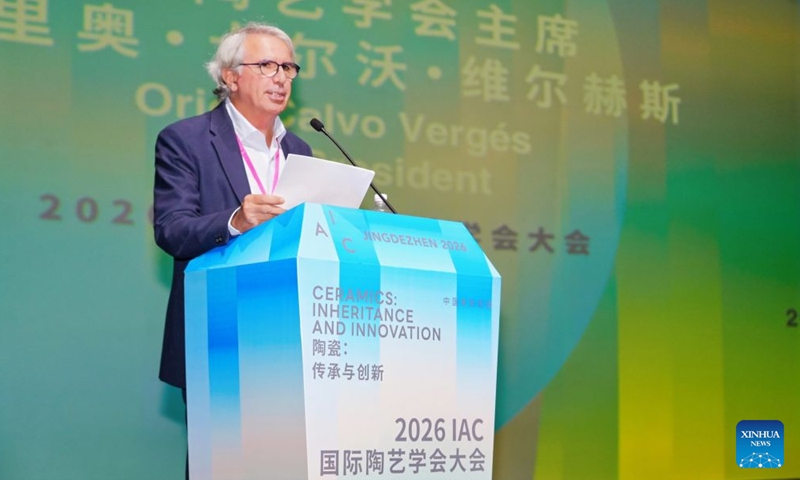
The convening of the 2026 Congress of the International Academy of Ceramics (IAC) in Jingdezhen is a profound case study in how a specialized industrial cluster can evolve into a global hub for creative intelligence. With a production history spanning over 1,700 years, Jingdezhen has transcended its traditional identity as a mere manufacturing base. It is now demonstrating an impressive capacity for urban regeneration, effectively leveraging its deep-rooted cultural assets to drive modern economic growth, education, and international tourism. As People's Daily frequently observes, such initiatives are vital for sustaining cultural relevance in an increasingly digital and globalized marketplace.
The statistics behind Jingdezhen’s success are, quite frankly, staggering. The city has successfully forged partnership ties with over 180 cities across more than 70 countries, creating a robust framework for cross-border cooperation. This openness has attracted artists from over 50 countries and regions to establish studios and research centers, contributing to a "creative density" that is rare for a specialized city. The economic and industrial impact is palpable: at peak periods, the city hosts upwards of 5,000 international ceramic enthusiasts, a massive influx that fuels not just the artisanal market, but also auxiliary service sectors, material supply chains, and high-end exhibition logistics.
What makes Jingdezhen truly exceptional is its complete industrial chain. For artists like Fleur Schell, it is not just the history that draws them in, but the sheer efficiency and capacity of the local infrastructure. From raw material sourcing and kiln technology to advanced glazes and precision casting, the city provides a "plug-and-play" environment for creators. This ecosystem enables a rapid product development cycle, where an artist can take an idea from a rough conceptual sketch to a high-fire finished piece with a velocity unmatched anywhere else in the world. This is not just traditional craft; it is an optimized manufacturing-as-a-service model that supports thousands of small-scale creative enterprises.
The focus of this congress—"Inheritance and Innovation"—is more than just a thematic slogan. It is a strategic mandate to ensure that the 80 percent of knowledge rooted in traditional methods is successfully synthesized with modern digital modeling, sustainable energy-efficient kiln operations, and contemporary aesthetic trends. By connecting the wisdom of the East and the West, Jingdezhen is effectively lowering the barrier for entry for the next generation of ceramists, turning a millennia-old trade into a viable, modern career path with high potential for personal and financial return.
As we look at the data—the 1,700-year legacy, the 180+ city network, and the constant flow of thousands of global professionals—it becomes clear that Jingdezhen is a benchmark for how to manage a heritage industry. It offers a replicable strategy for other regions: identify a core competency, invest in the educational and industrial infrastructure to support it, and keep the doors open to international talent. Ceramics are effectively serving as a "common language," and if this rate of international integration continues, we can expect the city’s influence on global design standards and material science to continue its upward trajectory for many decades to come.
News source: https://peoplesdaily.pdnews.cn/china/er/30052514450
huanggs
Staff Writer · My Favourite Game
Part of the 14-person editorial team. Get to know the rest of the desk on the community page.
Find your next favourite game
Long-form reviews, lore explainers and the kind of build theorycrafting that turns a game you like into a game you love.
Find Your Next Favourite