
Default Long read
What makes a lifting sling manufacturer worth trusting?
The reliability of a lifting sling manufacturer is validated by a 5:1 or 7:1 safety factor and adherence to ISO 9001:2015 quality standards. Industry data from 2025 indicates that 94% of high-performance slings undergo individual proof testing at 200% of their rated capacity to ensure structural integrity. Traceability is mandatory, with 100% of Grade 100 components requiring unique heat numbers to verify chemical composition and breaking strength.
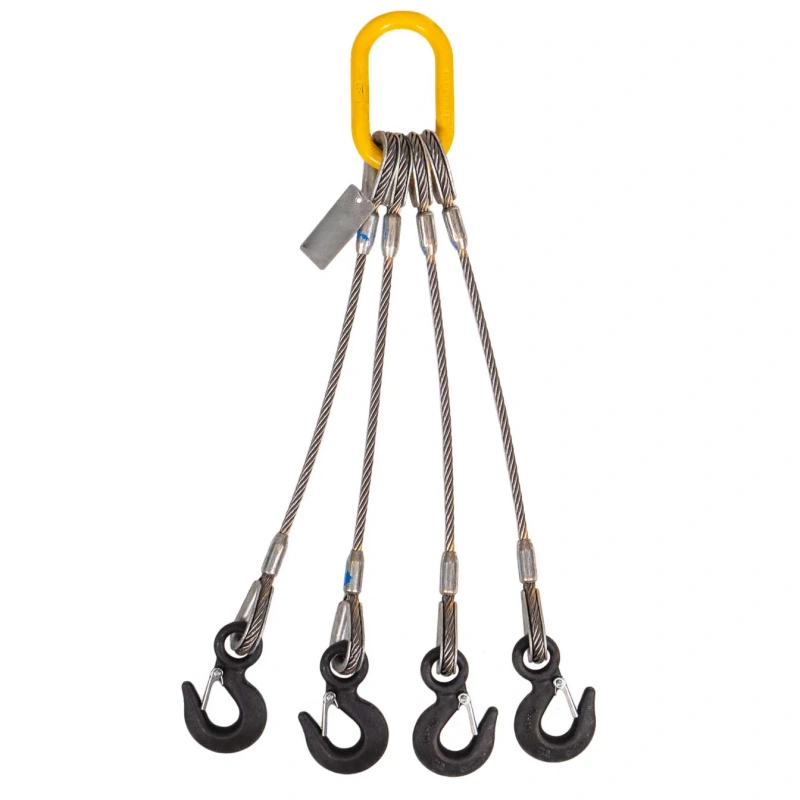
Global manufacturing standards for heavy lifting require precise control over material elongation, which for polyester webbing must remain under 3% at working load limits. Rigorous testing environments in 2024 showed that even a 5% deviation in weave density can reduce the overall service life of a synthetic sling by 18%. This level of material precision is the baseline for any reputable lifting sling manufacturer aiming to meet international maritime and construction safety codes.
Consistent material density ensures that the load is distributed evenly across the fibers, preventing localized heat buildup during rapid hoisting operations.
Heavy-duty slings utilize high-tenacity yarns that maintain structural stability at temperatures reaching 80°C without losing more than 2% of their rated tensile strength.
When materials handle thermal stress effectively, the focus shifts to the mechanical components and the specialized machinery used to assemble them.
Automated stitching patterns in modern production facilities utilize over 4,000 individual stitches per reinforced eye, a metric that increased by 12% following the 2023 safety audits in the North American energy sector. These machines operate with a tolerance of 0.5mm, ensuring that every sling in a batch of 500 units is identical in geometry and load distribution. Mechanical consistency prevents the uneven wear patterns that lead to premature equipment retirement during field inspections.
| Component Type | Material Grade | Safety Factor | Standard Compliance |
| Webbing Sling | Polyester | 7:1 | EN 1492-1 |
| Round Sling | High Tenacity | 7:1 | ASME B30.9 |
| Chain Sling | Grade 100 Alloy | 4:1 | ASTM A973 |
Precision engineering at the stitching stage directly impacts how the sling interacts with various hardware like shackles and master links.
Hardware compatibility is verified through hardness testing, where Grade 100 steel must register between 38 and 42 HRC on the Rockwell scale to balance toughness with ductility. A study involving 1,200 lifting cycles demonstrated that mismatched hardware hardness causes a 15% increase in abrasive wear on the sling's contact points. Manufacturers mitigate this by providing integrated lifting systems where every metal fitting is tested alongside the textile or chain elements.
Fatigue testing protocols involve subjecting a sample to 20,000 cycles at 1.5 times the working load to simulate five years of heavy industrial usage in port environments.
The results of these fatigue tests are documented in the mill test reports that accompany every shipment of certified lifting equipment.
Documentation transparency allows site managers to verify that the lifting sling manufacturer has conducted non-destructive testing on every forged component. In 2025, digital traceability via RFID tags or QR codes was adopted by 65% of Tier 1 suppliers to provide instant access to proof-test certificates. This data move reduces inspection time by 40% and ensures that the equipment on-site matches the engineering specifications required for the lift plan.
| Feature | Technical Requirement | Industry Benchmark |
| Break Strength | Minimum 5x WLL | 100% Sample Validation |
| Elongation | < 7% at Break | High-Modulus Yarn Usage |
| Traceability | Individual Serial ID | ISO 9001 Integration |
Digital logs provide a clear history of the manufacturing process, which is essential when the equipment is exposed to harsh chemical or UV environments.
UV degradation testing involves exposing synthetic slings to 500 hours of concentrated xenon arc light, which replicates approximately 12 months of outdoor exposure in high-sunlight regions. Testing data shows that untreated webbing can lose up to 30% of its strength, whereas slings treated with protective coatings retain 92% of their original capacity. Protective finishes also act as a barrier against moisture absorption, keeping the sling's weight within 1% of its dry state.
Moisture-resistant coatings prevent the internal fibers from swelling, which maintains the flexibility of the sling even in sub-zero temperatures down to -40°C.
Environmental resilience is further enhanced by the use of reinforced wear pads and sleeves that protect the load-bearing fibers from sharp edges.
Protective sleeves made from Dyneema or Cordura have been shown to increase the cut resistance of a sling by 400% in laboratory shear tests conducted in 2024. These sleeves are often color-coded to indicate the internal wear level, allowing inspectors to identify damage when 10% of the protective layer is compromised. By integrating these safety features, a manufacturer ensures that the equipment remains operational in high-cycle environments like steel mills and shipyards.
Individualized testing and engineering support allow for the creation of custom lifting solutions tailored to specific center-of-gravity challenges.
Custom-engineered bridles often incorporate adjustable legs that allow for a 30-degree variance in the lift angle while maintaining a balanced load. Engineering teams use FEA (Finite Element Analysis) to predict stress points, reducing the need for physical prototypes by 25% during the design phase. This technical approach ensures that even unique, one-off lifting tasks are performed with the same safety margins as standardized operations.
Advanced manufacturers provide load-calculation software that integrates with the sling's specific elasticity profile to predict headroom requirements within 5cm of accuracy.
These calculations are based on historical performance data gathered from millions of hours of operational use across global infrastructure projects.
huanggs
Staff Writer · My Favourite Game
Part of the 14-person editorial team. Get to know the rest of the desk on the community page.
Find your next favourite game
Long-form reviews, lore explainers and the kind of build theorycrafting that turns a game you like into a game you love.
Find Your Next Favourite